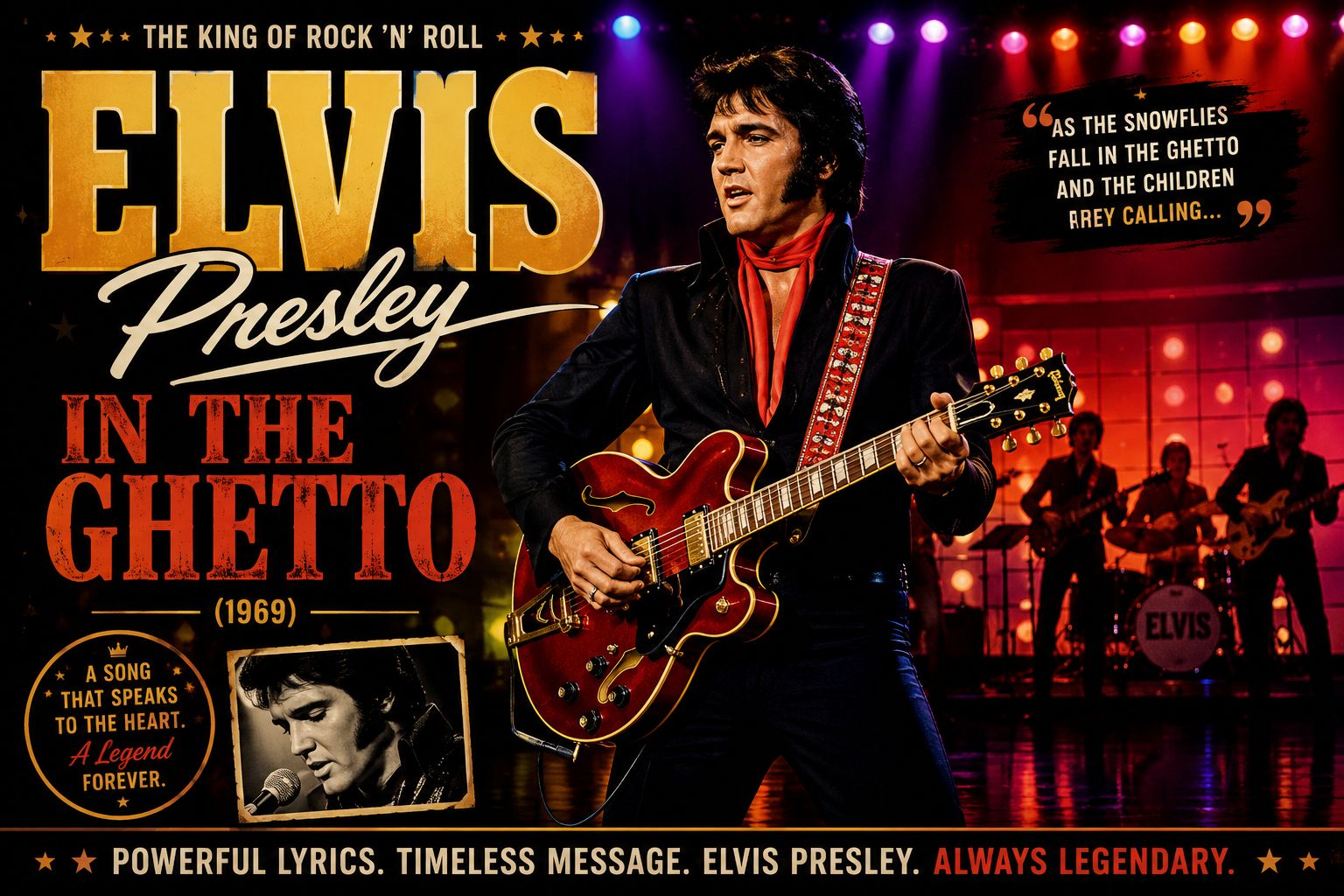
“In the Ghetto” (originally titled “The Vicious Circle”) is a 1969 song recorded by Elvis Presley and written by Mac Davis.
Throughout his extraordinary career, Elvis Presley recorded countless songs that became international hits, but only a select few demonstrated the remarkable depth and versatility of his artistry quite like In the Ghetto. Released in 1969, the song marked an important chapter in Elvis’s musical journey, showing audiences that his talent extended far beyond energetic rock and roll performances. With its thoughtful storytelling, memorable melody, and heartfelt vocal delivery, In the Ghetto remains one of the most respected and enduring recordings in his remarkable catalog.
By the late 1960s, the world of popular music had changed dramatically. New musical styles were emerging, and audiences were increasingly drawn to songs that explored meaningful themes and reflected real-life experiences. Following the success of his celebrated television comeback in 1968, Elvis Presley returned to the recording studio with renewed confidence and artistic focus. In the Ghetto became one of the defining recordings of this exciting period, reminding listeners of his extraordinary ability to connect through sincere and expressive performances.
Written by acclaimed songwriter Mac Davis, the song tells a reflective story that encourages listeners to think about the importance of opportunity, compassion, and community support. Rather than presenting simple entertainment, it invites audiences to consider how individual lives can be shaped by the environments in which people grow up and the choices available to them. Its thoughtful narrative helped distinguish the song from many other popular recordings of the era and contributed significantly to its lasting appeal.
One of the recording’s greatest strengths is its understated musical arrangement. Instead of relying on dramatic production or elaborate instrumentation, In the Ghetto allows the melody and lyrics to take center stage. Gentle acoustic guitar, subtle orchestration, and carefully balanced backing vocals create an atmosphere of quiet reflection, allowing Elvis’s expressive voice to deliver the story with clarity and sincerity. This restrained approach gives the recording a timeless quality that continues to resonate with audiences today.
Elvis Presley’s vocal performance is widely regarded as one of the finest of his later career. His delivery is measured, warm, and deeply authentic, demonstrating remarkable emotional control without ever becoming exaggerated. Every phrase feels carefully considered, allowing listeners to engage naturally with the song’s message. This ability to communicate complex emotions through subtle expression became one of the defining characteristics of Elvis’s artistry and remains one of the reasons his music continues to inspire audiences around the world.
Upon its release, In the Ghetto achieved impressive commercial success while also earning widespread critical praise. The single climbed music charts internationally and introduced Elvis to a new generation of listeners who appreciated both his vocal abilities and his willingness to record songs with thoughtful subject matter. Its success confirmed that Elvis remained one of the most influential figures in popular music despite the rapidly changing musical landscape of the late 1960s.
The song also played an important role in broadening public perceptions of Elvis Presley as an artist. While he had already become famous for energetic rock and roll classics, memorable ballads, and successful film soundtracks, In the Ghetto highlighted his ability to interpret songs with narrative depth and meaningful themes. It demonstrated that his remarkable voice could bring sensitivity and authenticity to stories that encouraged reflection as well as entertainment.
Over the decades, In the Ghetto has continued to reach audiences through classic radio programming, streaming platforms, documentaries, and tribute performances celebrating Elvis Presley’s enduring legacy. Many younger listeners first encounter the song while exploring his extensive catalog and are often surprised by its timeless relevance and thoughtful message. Its continued popularity reflects the enduring power of music that combines outstanding songwriting with sincere performance.
Music historians frequently recognize In the Ghetto as one of the defining achievements of Elvis Presley’s later career. The recording represents a successful blend of compelling storytelling, elegant musical arrangement, and exceptional vocal interpretation. It also illustrates how popular music can encourage reflection while remaining accessible to audiences of every generation.
Today, more than half a century after its release, In the Ghetto remains one of Elvis Presley’s most admired recordings. It stands as a testament to his artistic growth, his willingness to embrace meaningful material, and his remarkable ability to communicate with listeners through music. Its timeless melody, thoughtful message, and unforgettable performance continue to inspire audiences across the globe, ensuring that this remarkable recording will remain an essential part of Elvis Presley’s extraordinary legacy for generations to come.
Video